


Fuel properties
Bio-/Synthetic gasoline consists of up to 150 distinct hydrocarbon types, generally containing 4 to 12 carbon atoms per molecule. The main groups are alkanes and aromatics such as e.g. octane, pentane, hexane, toluene, durene etc.
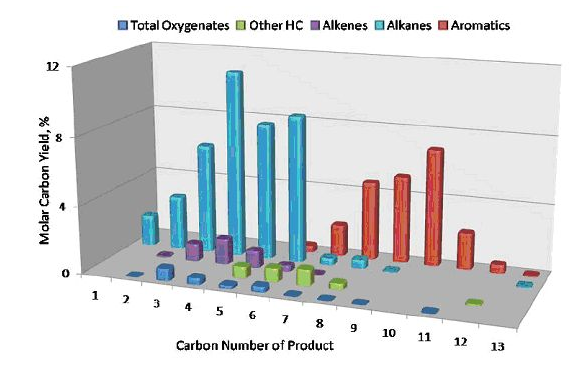
Figure 1. An example of conversion of sucrose and xylose into gasoline-range hydrocarbons using aqueous-phase catalytic conversion and acid condensation (Blommel 2008).
Table 1. Hydrocarbon composition and octane numbers of ExxonMobil MTG plants (Zhao et al. 2008, Kam 1981) and TIGAS.
|
|
New Zealand |
Wesseling |
TIGAS |
|
Alkanes, wt-% |
53 |
67 (incl. Naphtenes) |
50-65 |
|
Alkenes, wt-% |
12 |
6 |
5-15 |
|
Naphthenes, wt-% |
7 |
|
|
|
Aromatics, wt-% |
28 |
27 |
25-35 |
|
Benzene, vol-% |
0.3 |
|
< 0.5 |
|
Sulfur, mg/kg |
0 |
|
< 1 |
|
RON |
92.2 |
96.8 |
92-98 |
|
MON |
82.6 |
87.4 |
83-88 |
|
Vapour pressure (Reid), kPa |
85 |
|
Adjustable |
|
Density, kg/m3 |
730 |
|
720-760 |
|
Induction period, min |
325 |
|
|
|
Durene content, wt-% |
2 |
|
|
|
Distillation, % evaporation at 70/100/180 °C |
31.5/53.2/94.9 |
|
|
|
Distillation end point, °C |
204,5 |
|
|
|
|
Note: 3 – 6wt-% durene, for which melting point is 79 °C. For isomerized to isodurene melting point is -23.7 °C. |
|
|
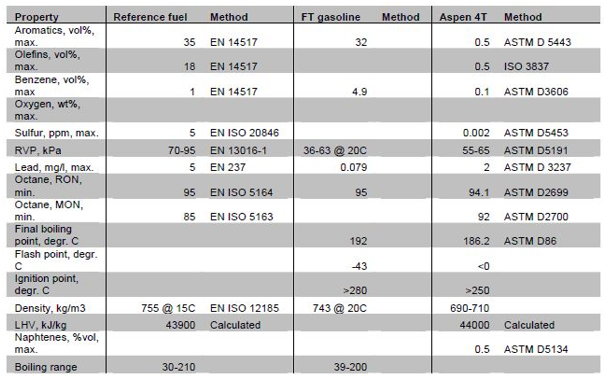
Table 2. Properties of fuels used in a study by Larsen et al. (2007).